You Got the GPUs. Now What?
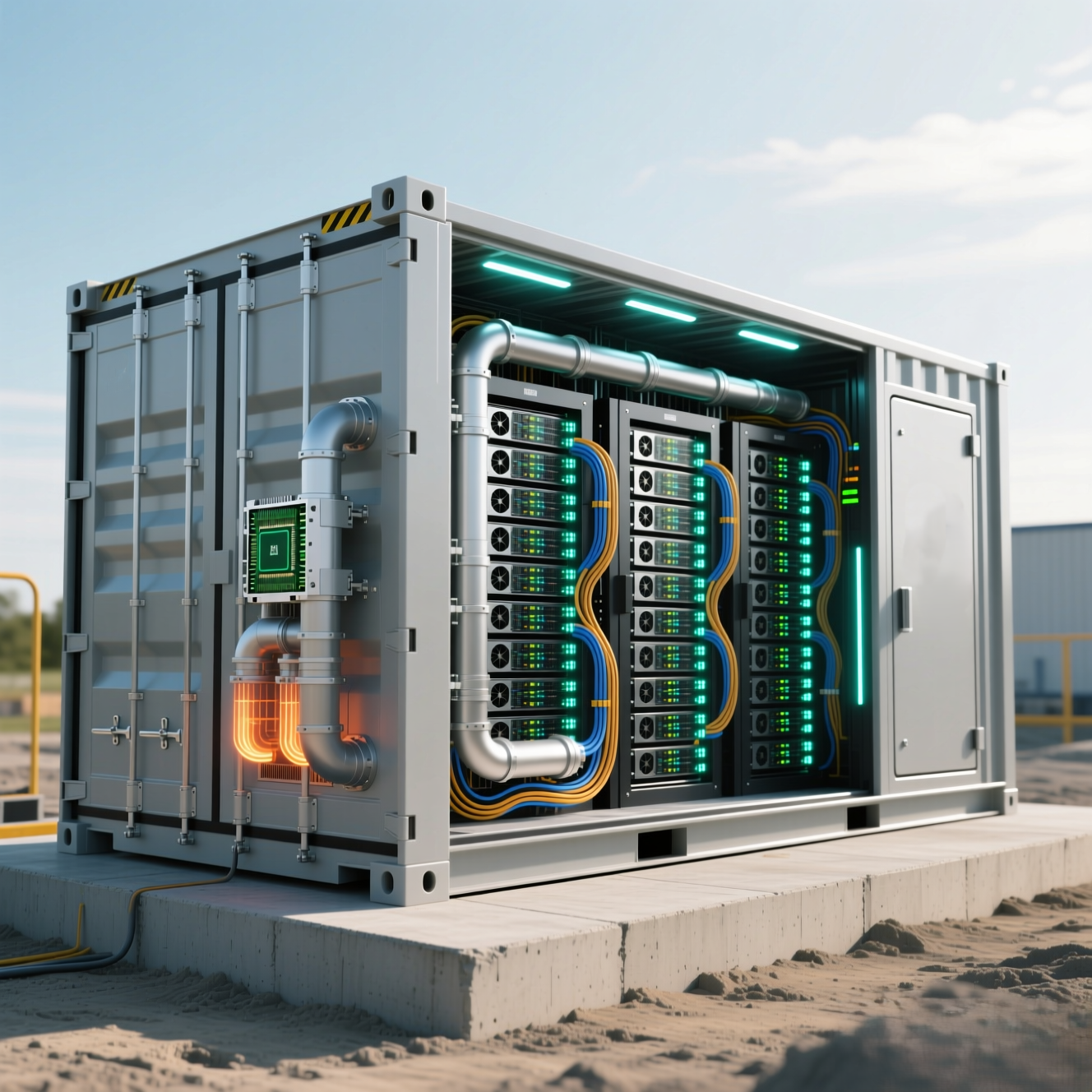
Securing allocation of the latest accelerator hardware — whether that's a next-generation NVIDIA cluster, wafer-scale compute from Cerebras, or proprietary silicon you've developed in-house — is a genuine win. In today's market, supply is the constraint, and you've solved it. The problem that tends to surface immediately after is one that catches even experienced infrastructure teams off guard: nowhere to put it.
The Colocation Problem
Most colocation providers are built around the power and cooling assumptions of the previous generation of hardware. The latest accelerators don't just push those assumptions — they shatter them. Power density per rack has increased dramatically, cooling requirements have shifted from air to liquid in configurations that many facilities simply weren't designed to support, and the network topology required for high-performance AI training clusters adds another layer of complexity that a standard cage or suite can't accommodate.
The result is a frustrating conversation where a facility that looked viable on paper starts attaching caveats. Major upgrades are required. Timelines stretch. The capital expenditure that was supposed to be the provider's problem becomes, in various ways, yours. And the contractors doing that upgrade work are optimizing for the facility's requirements, not yours.
Your hardware is sitting in a warehouse while the infrastructure debate plays out.
A Different Conversation
We built our modular system specifically to eliminate that scenario. When you come to us with a new accelerator, the conversation starts with the hardware's reference specifications — power draw, cooling method, network architecture, physical layout — and works outward from there. Our engineers and designers have direct experience with the latest generation of accelerators across multiple vendors and form factors. We know what the hardware actually needs, not what a facility built five years ago can be persuaded to provide.
The output of that conversation is a module designed and manufactured to meet your requirements precisely. Not approximately. Not with workarounds. To spec.
Factory-Built to Reference Specs
Our modules are manufactured in a controlled factory environment, which means the precision and repeatability that your accelerator investment depends on is built in from the start. Power distribution is sized and configured for the actual load profile of your hardware. Cooling infrastructure — whether that's rear-door heat exchangers, direct-to-chip liquid cooling, or immersion — is selected and installed based on the thermal requirements of your specific accelerator, not retrofitted to whatever the facility already had. Network cabling and topology are laid out to support the fabric your workload requires.
When the module arrives at your site, it isn't a construction project — it's a deployment. The hard work happened in the factory, under controlled conditions, with engineers who understood what they were building and why.
Protecting Your Accelerator Investment
The hardware itself represents enormous value — in acquisition cost, in the competitive advantage it provides, and in the revenue it will generate once it's running. Infrastructure that isn't purpose-built for that hardware puts all of that at risk. Thermal margins that are too tight accelerate degradation. Power delivery that doesn't match the load profile creates instability. Network bottlenecks limit the utilization you can actually achieve.
A module built to reference specs is, in a meaningful sense, an extension of your hardware investment. It's the environment that lets the accelerator perform the way it was designed to perform, reliably, from day one, without the burn-in period of troubleshooting a bespoke field installation.
Speed When It Matters Most
The window between securing hardware supply and being able to generate revenue from it is a real cost. Every week your accelerators sit idle is a week of compute capacity you've paid for and can't monetize. Our parallel deployment model — factory production running concurrently with site preparation — compresses that window significantly. You're not waiting for a sequential construction process to complete. The module is being built while your site is being readied, and deployment, when it happens, is fast.
For enterprises racing to put new capability into production and neoclouds competing on time-to-market, that compression matters.
The Bottom Line
Getting hardware supply is the hard part. Getting it into production shouldn't be. If you've secured next-generation accelerators and you're running into infrastructure walls — at colocation facilities, with contractors, or on your own site — our team is the straightforward path forward. Bring us your hardware specs. We'll build the module that protects your investment and gets you running.